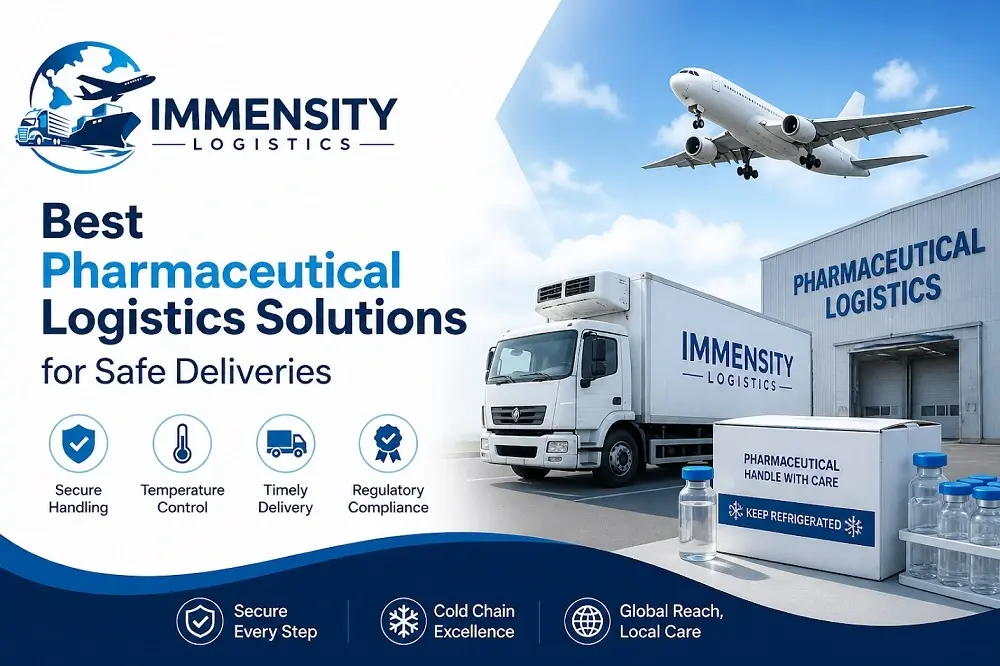
Best Pharmaceutical Logistics Solutions for Safe Deliveries
Introduction to Pharmaceutical Logistics Solutions for Safe Delivery Pharmaceutical Logistics Solutions for Safe Delivery are essential in today’s fast-moving world. We handle medicines that are sensitive and valuable. So, we must be careful at every step. At the same time, we need to move quickly. Today, Pharmaceutical logistics services are in high demand. More patients depend on timely delivery. Therefore, we improve our systems regularly. We also avoid delays and reduce risks. In this blog, we explain how we manage safe delivery. We also show how different logistics services work together. What Are Pharmaceutical Logistics Solutions for Safe Delivery? Pharmaceutical logistics solutions for safe delivery are more advanced than regular shipping. They require strict monitoring. They also need controlled environments. For example, many medicines must stay within a fixed temperature range. Without this, they lose effectiveness. So, we use modern storage and transport systems. In addition, we focus on: Because of these steps, we reduce risks. As a result, patients receive safe products. Key Features of Pharmaceutical Logistics Solutions for Safe Delivery We focus on quality at every stage. However, safe delivery depends on several factors. So, we build reliable systems. Temperature Control Systems Special vehicles and storage units help maintain the correct temperature. Without proper control, medicines can get damaged. Therefore, we monitor conditions constantly. Real-Time Shipment Tracking We track shipments at every step. This way, we always know their location. As a result, we improve transparency and control. Secure Packaging Solutions Strong packaging protects products during transit. That’s why we use tested materials. In addition, our Packaging and Paper Logistics ensures extra safety. Importance of Full Truckload Transport Service in Pharma Logistics A full truckload transport service helps reduce handling. Because of this, products remain safer. We use dedicated trucks for bulk shipments. This improves efficiency. It also offers: So, we meet deadlines without compromising quality. How Transport Logistics Company in USA Supports Delivery A transport logistics company in the USA plays a big role in global supply chains. The country has strong infrastructure. Therefore, shipping becomes faster and smoother. We also work with the best logistics services in USA. This helps us maintain high standards. Because of this, we ensure: Expanding Reach with Logistics Solutions Company in Canada We partner with a logistics solutions company in Canada to expand our network. Canada offers reliable logistics systems. So, deliveries remain efficient. This partnership provides: As a result, we serve more regions effectively. Sustainable Pharmaceutical Logistics Solutions for Safe Delivery Sustainability is now important. So, we are improving our approach. Solar Energy Logistics Services We use solar energy logistics services to reduce energy use. This lowers operational costs. It also reduces environmental impact. Recycling Logistics Company Support We also work with a recycling logistics company. This helps manage waste safely. For example, we recycle packaging materials. Therefore, we support eco-friendly logistics operations. Integration with Packaging and Paper Logistics Pharmaceutical logistics depends on strong packaging systems. So, we rely on packaging and paper logistics. We also coordinate with: Because of this, operations run smoothly. Challenges in Pharmaceutical Logistics Solutions for Safe Delivery We face several challenges. However, we handle them with proper planning. Regulatory Compliance Each country has different rules. So, we follow all guidelines carefully. Temperature Sensitivity Many medicines need strict temperature control. Therefore, we use advanced cooling systems. On-Time Delivery Delays can affect lives. So, we plan backup routes. We also track weather and traffic conditions. Benefits of Advanced Pharmaceutical Logistics Solutions for Safe Delivery Modern logistics systems offer clear advantages. Moreover, these systems help us grow. So, we can manage large shipments easily. Future of Pharmaceutical Logistics Services The future looks promising. Technology is improving rapidly. So, we continue to upgrade our systems. Automation and AI Automation reduces errors. AI improves route planning. As a result, deliveries become faster. Smart Warehousing Smart storage systems maintain product quality. They also increase efficiency. Because of these innovations, Pharmaceutical Logistics Solutions for Safe Delivery will become even more reliable. Conclusion Pharmaceutical delivery requires care and precision. So, we focus on safety at every step. At the same time, we ensure speed and efficiency. We combine: All these services work together. Therefore, we create a strong supply chain. In the end, we don’t just deliver products. We deliver trust. That’s what we stand for at Immensity Logistics. 1. What are Pharmaceutical Logistics Solutions for Safe Delivery? Pharmaceutical Logistics Solutions for Safe Delivery ensure medicines are stored, handled, and transported safely. We use temperature control, secure packaging, and tracking systems to maintain product quality. 2. How does a full truckload transport service help in pharma logistics? A full truckload transport service reduces handling and transit time. As a result, medicines remain safer. It also improves temperature control and ensures faster delivery. 3. How does a logistics solutions company in Canada support supply chains? A logistics solutions company in Canada helps expand delivery networks. It offers reliable cold chain systems and improves delivery timelines across regions. 4. What is the role of Packaging and Paper Logistics in pharma delivery? Packaging and paper logistics protect products during transport. Strong packaging prevents damage and maintains product integrity 5. Why work with a recycling logistics company in pharma logistics? A recycling logistics company helps manage waste safely. It supports recycling of packaging materials and reduces environmental impact. 6. How do you ensure safe pharmaceutical delivery? We ensure safety through temperature control, secure packaging, real-time tracking, and efficient transport planning. These steps reduce risks and ensure quality delivery.