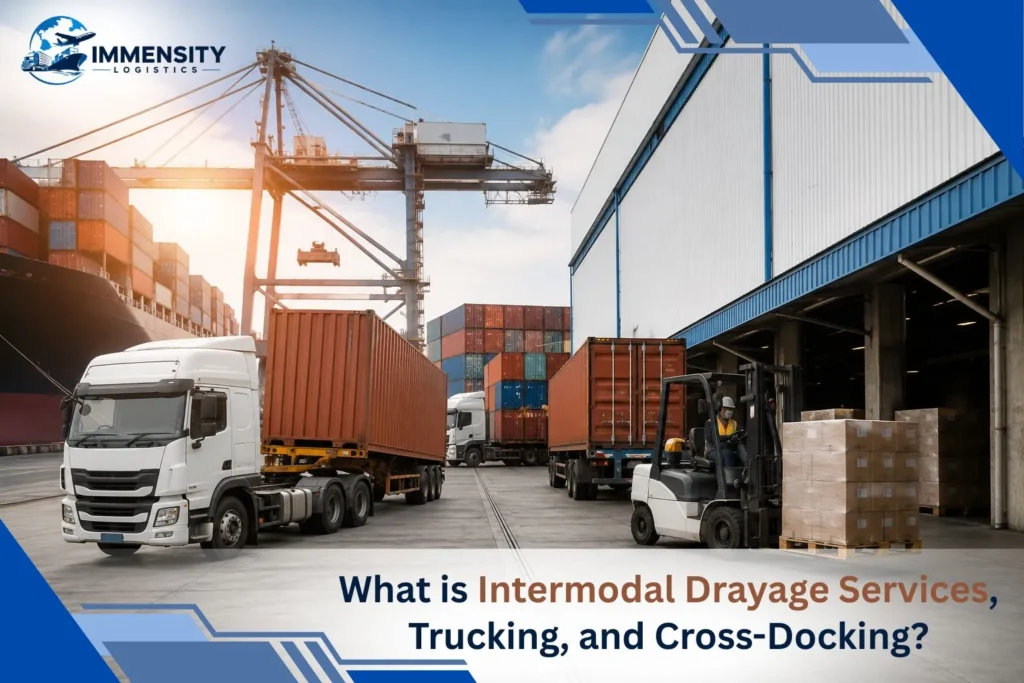
What is Intermodal Drayage Services, Trucking, and Cross-Docking?
Introduction Every shipment follows a journey before it reaches its destination. Sometimes, that journey involves one truck. However, many shipments travel by truck, rail, or ocean before arriving at the customer. Because of this, businesses need a transportation strategy that keeps freight moving without delays. This is where intermodal drayage services become important. They connect different transportation methods and help freight move smoothly between ports, rail terminals, warehouses, and final destinations. At the same time, trucking provides flexible delivery, while cross-docking speeds up distribution by reducing warehouse storage. Today, businesses also expect faster deliveries and lower transportation costs. Therefore, using the right combination of logistics services is more important than ever. A well-planned supply chain not only saves money but also improves customer satisfaction. In this guide, we’ll explain how intermodal drayage, trucking, and cross-docking work together. Moreover, you’ll learn why these services support industries ranging from food distribution to renewable energy. Understanding Intermodal Drayage Services For example, a container may arrive at a seaport. It then needs to travel to a nearby rail terminal or warehouse before continuing its journey. That’s where drayage plays an essential role. Although the distance is usually short, this step has a major impact on delivery schedules. If containers sit too long at a port, businesses may face storage charges and unnecessary delays. Our intermodal drayage process may include: As a result, freight continues moving efficiently instead of waiting at transportation hubs. Why Trucking Remains Essential While rail and ocean shipping move freight across long distances, trucks complete the final delivery. Because trucks can access almost every location, they remain the most flexible transportation option available. Furthermore, trucking connects manufacturers, warehouses, retailers, and customers every day. Modern trucking supports businesses by providing: In addition, trucking works alongside intermodal transportation instead of replacing it. Together, these services create a stronger logistics network. What Is Cross-Docking? Cross-docking is a warehouse process that reduces storage time. Instead of placing products into inventory, workers transfer them directly from an incoming trailer to an outgoing truck. Consequently, products spend very little time inside the warehouse. This process offers several advantages. For example, businesses can: Moreover, cross-docking helps businesses respond quickly to customer demand. Since products don’t remain in storage, deliveries often arrive much faster. How These Services Work Together Although each transportation service has a different purpose, they become even more effective when combined. Imagine a shipment arriving from another country. First, a container reaches a seaport. Next, intermodal drayage services transport it to a rail terminal. Then, rail moves the freight across the country. After that, trucks collect the shipment and transport it to a cross-docking facility. Finally, the products move onto local delivery trucks and reach customers. Because every transportation method performs a specific task, businesses enjoy greater efficiency throughout the shipping process. Furthermore, combining these services reduces unnecessary handling while improving delivery performance. Why Integrated Logistics Matters Today’s supply chains are more complex than ever. Customers expect fast deliveries. Meanwhile, transportation costs continue to increase. Therefore, businesses need smarter logistics strategies rather than simply adding more trucks. Integrated transportation provides several important benefits. These include: In addition, businesses gain more control over their supply chains because every shipment remains connected from pickup to delivery. Supporting the Food Industry A dependable food transportation company understands that timing is critical. Fresh products, frozen goods, and packaged foods all require reliable transportation. Even a short delay can affect quality. Therefore, careful planning becomes essential throughout the shipping process. Our transportation approach helps support: Moreover, efficient scheduling helps products arrive fresh while reducing unnecessary delays. Reliable Lumber Transportation Construction projects depend on materials arriving at the right time. That’s why dependable lumber transportation plays an important role in the building industry. Wood products are often large, heavy, and difficult to handle. Therefore, transportation requires proper equipment and careful scheduling. Typical shipments include: In addition, efficient transportation keeps construction projects moving without costly interruptions. Agriculture Depends on Efficient Logistics Every agriculture logistics company manages shipments that support farms and food production. However, agricultural transportation often changes with the seasons. Harvest periods create higher shipping demand. Consequently, logistics planning becomes even more important. Agricultural freight may include: Furthermore, reliable transportation helps farmers and suppliers avoid delays during busy seasons. Moving Heavy Equipment Safely Some shipments require much more than standard transportation. Large construction machines, industrial equipment, and oversized freight demand specialized planning. That’s why experienced heavy equipment movers focus on safety before every shipment begins. Common equipment includes: Moreover, route planning, permits, and proper trailers help ensure equipment reaches its destination safely. Supporting Renewable Energy Projects The renewable energy industry continues to expand every year. As a result, transportation has become a key part of successful solar projects. Large solar installations require thousands of components. Moreover, many of these items are fragile and expensive. Therefore, every shipment must be planned carefully. Professional solar energy logistics services help move materials safely from manufacturers to project sites. These shipments often include: Furthermore, organized transportation reduces handling and lowers the risk of product damage. Consequently, installation teams can begin work without unnecessary delays. Packaging and Paper Products Need Careful Handling Paper products may seem simple to transport. However, they require proper handling throughout the journey. Moisture, poor stacking, and rough handling can damage paper products before they reach customers. Therefore, careful loading and secure transportation are essential. Reliable packaging and paper logistics services support manufacturers and distributors by moving products safely and efficiently. These shipments commonly include: In addition, organized transportation helps businesses reduce product loss while maintaining quality. Technology Makes Logistics Smarter Modern transportation depends on more than trucks alone. Instead, technology helps businesses monitor every shipment from pickup to delivery. For example, digital tracking allows customers to know where their freight is at any time. Today’s logistics operations often use: As a result, businesses receive better visibility throughout the shipping process. Furthermore, faster communication allows transportation teams to respond quickly when unexpected situations occur Reducing Costs Through Better Planning Many businesses focus