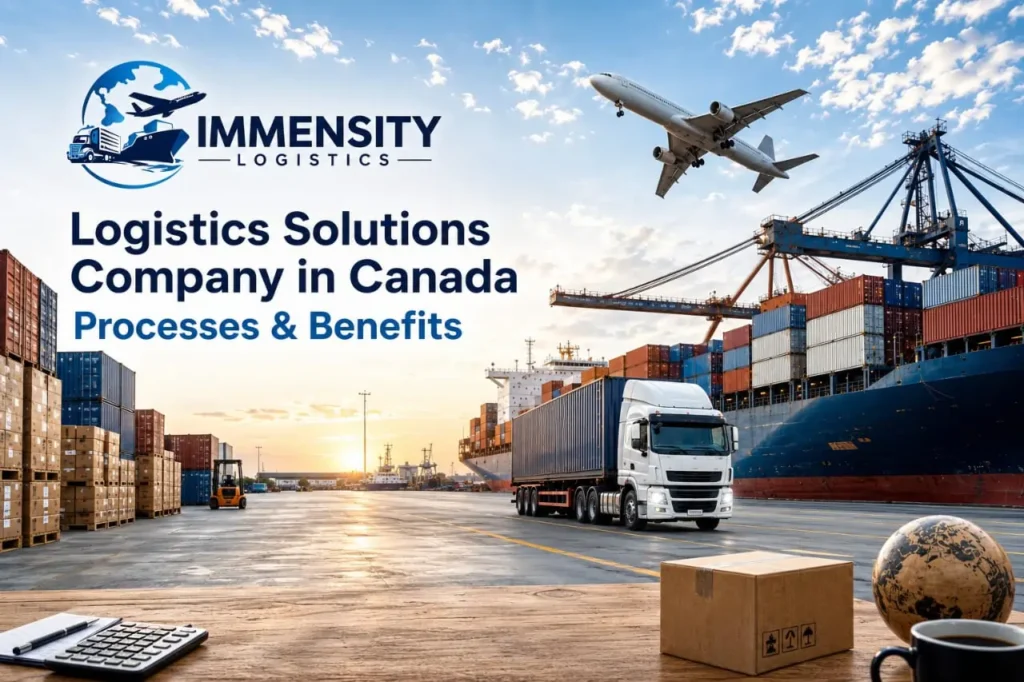
Logistics Solutions Company in Canada: Processes & Benefits
Supply chains have become more complex than ever. Therefore, businesses need reliable logistics partners to manage growing transportation and distribution demands. Customers expect faster deliveries, greater visibility, and consistent service quality. Moreover, companies are looking for smarter ways to improve efficiency while controlling costs. This Logistics Solutions Company in Canada: Processes & Benefits Guide explains how effective logistics strategies help businesses streamline operations, strengthen supply chain performance, and support long-term growth. Why Businesses Choose the Best Logistics Solutions Company in Canada Supply chains have become more complex than ever. Customers expect faster deliveries, greater visibility, and consistent service quality. Therefore, businesses need logistics partners that can handle these challenges efficiently. The Best Logistics Solutions Company in Canada provides support across transportation planning, freight coordination, warehousing, inventory management, and shipment tracking. Furthermore, integrated logistics services help businesses improve productivity while reducing operational risks. As a result, organizations achieve enhanced supply chain performance and a competitive edge in their markets. Understanding the Modern Logistics Process Successful logistics operations involve much more than simply moving goods from one location to another. Instead, every shipment follows a structured process designed to maximize efficiency. Consequently, businesses can maintain better control over their supply chains. Planning and Forecasting First, effective logistics begins with proper planning. Businesses must evaluate shipment volumes, customer demand, transportation requirements, and delivery schedules. In addition, forecasting helps identify future supply chain needs. As a result, organizations can allocate resources more efficiently and avoid unnecessary disruptions. Likewise, better forecasting improves inventory accuracy. Inventory Management Inventory control is another important part of logistics operations. Products must be available when customers need them. Therefore, inventory levels require constant monitoring. Moreover, efficient inventory management reduces storage costs while preventing stock shortages and overstock situations. Consequently, businesses can improve operational efficiency. Transportation Coordination Once inventory is ready for shipment, transportation planning becomes the next priority. This stage includes route selection, carrier management, shipment scheduling, and tracking. Meanwhile, real-time visibility helps businesses monitor shipments more effectively. As a result, products move more efficiently through the supply chain. The Importance of Transportation in Supply Chain Success Transportation connects every stage of the supply chain. Without reliable transportation, products cannot move efficiently between suppliers, warehouses, and customers. A trusted transportation logistics company in Canada helps businesses maintain smooth operations while improving delivery performance. Furthermore, transportation planning contributes directly to customer satisfaction and cost control. Because of these factors, many businesses prioritize transportation optimization. Road Freight Remains a Reliable Transportation Solution Road transportation continues to be one of the most widely used freight solutions across North America. As a dependable road transportation company, we help businesses transport goods efficiently between manufacturing facilities, warehouses, distribution centers, and customer locations. Road transportation offers several advantages: In addition, road freight supports businesses of all sizes. For this reason, trucking remains a key component of modern logistics networks. How Intermodal Transportation Improves Efficiency Businesses often need multiple transportation methods to move freight effectively. Therefore, intermodal transportation has become increasingly important. Intermodal drayage services help coordinate container movement between ports, rail terminals, warehouses, and distribution centers. In addition, intermodal transportation combines the strengths of different freight modes to create more efficient shipping solutions. Benefits of intermodal transportation include: Consequently, businesses can move goods more efficiently while maintaining service reliability. Ocean Freight Supports International Trade Global commerce depends heavily on maritime transportation. Therefore, ocean shipping remains a critical component of international supply chains. An experienced ocean freight logistics company helps businesses manage overseas shipments, customs documentation, container movement, and transportation planning. Ocean freight offers important advantages: However, international shipping can involve complex regulations and scheduling challenges. Therefore, effective planning and shipment visibility remain essential. Freight Brokerage Simplifies Transportation Management Managing carrier relationships can be time-consuming and complex. Fortunately, freight brokerage services in USA help simplify the process. Freight brokers connect businesses with qualified carriers while coordinating transportation activities throughout the shipment journey. These services typically include: Moreover, freight brokerage services provide access to larger transportation networks. As a result, businesses gain greater flexibility during periods of changing demand. Cross-Border Logistics Requires Specialized Expertise Trade between Canada and the United States continues to grow. At the same time, cross-border transportation introduces additional compliance requirements. A professional transport logistics company in USA helps businesses navigate customs procedures, regulatory requirements, and documentation processes. Key cross-border logistics priorities include: Consequently, businesses can reduce delays and maintain smoother international transportation operations. Equipment Solutions Support Daily Operations Transportation is only one aspect of logistics management. Warehousing and material handling are equally important. Therefore, many businesses rely on forklift rental services to support loading, unloading, and inventory movement activities. Forklift rentals provide several benefits: Furthermore, rental programs allow businesses to adjust equipment requirements according to changing demand levels. Technology Is Transforming Logistics Operations Technology has changed the logistics industry significantly over the last decade. Today, businesses depend on digital tools to improve visibility and operational efficiency. A modern logistics management solutions company uses advanced technology to support transportation planning, warehouse management, and shipment tracking. Common logistics technologies include: As a result, businesses can make better decisions and respond more quickly to operational challenges. Benefits of Working With Professional Logistics Providers Investing in professional logistics services offers numerous long-term advantages. Better Cost Control Efficient logistics planning reduces unnecessary transportation expenses. Moreover, optimized routes and better resource utilization improve overall profitability. Improved Delivery Performance Customers expect fast and reliable deliveries. Therefore, professional logistics support helps maintain consistent service standards. Enhanced Supply Chain Visibility Real-time tracking offers useful information about shipment status. Furthermore, greater visibility supports more informed decision-making. Increased Business Scalability As businesses grow, logistics requirements become more complex. Fortunately, flexible logistics solutions help organizations expand without disrupting operations. Stronger Customer Satisfaction Reliable deliveries contribute directly to positive customer experiences. Consequently, businesses can strengthen customer loyalty and brand reputation. What to Look for in a Logistics Partner Selecting the right logistics provider is an important business decision. Therefore, organizations should evaluate several key factors before making a choice. Consider the following: Furthermore, transparency and communication